643 Everridge Drive SW T2Y5E7 Calgary, AB
E-mail us: soboplumbing@gmail.com
Monday-Friday 8am-5pm

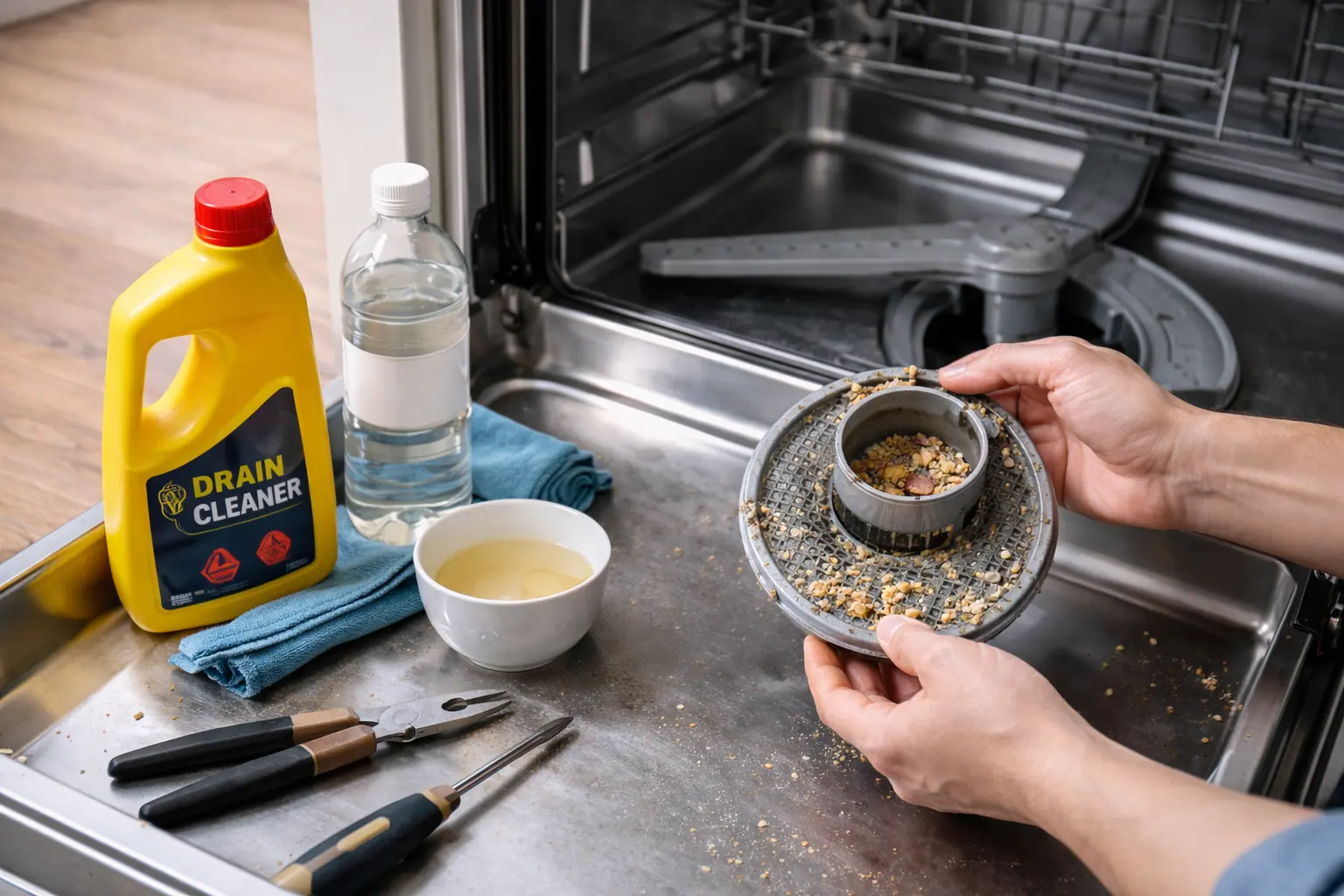
Dishwashers are wonderful machines. They quietly sit in the kitchen, tirelessly scrubbing away grease, food particles, and last night’s pasta sauce without complaining. But when a dishwasher starts draining slowly or leaving water at the bottom, many homeowners begin to wonder about quick fixes. One common question appears surprisingly often — can you use drain cleaner in a dishwasher?
At first glance, it sounds logical. If chemical drain cleaners can clear a clogged sink or shower, why not use them for a dishwasher drain as well? The idea seems convenient, fast, and inexpensive.
However, the reality is a bit more complicated — and a lot more interesting. In fact, using drain cleaner in a dishwasher can turn a small inconvenience into a much bigger (and more expensive) problem.
Let’s take a closer look at why.
To understand the risks, it helps to know how a dishwasher drains water.
Unlike a simple sink pipe, a dishwasher is connected to several delicate internal components. Water travels through pumps, filters, spray arms, sensors, hoses, and valves before finally reaching the household drainage system.
In simple terms, a dishwasher drainage system typically includes:
These parts are designed for water and mild detergent — not aggressive chemicals.
Drain cleaners, on the other hand, are designed to dissolve organic matter inside large metal pipes. They are powerful, corrosive, and extremely reactive. When these chemicals enter the confined and delicate environment of a dishwasher, they can cause serious damage very quickly.
In other words — a dishwasher is not a battlefield where chemical cleaners should be unleashed.
The consequences of adding drain cleaner to a dishwasher range from mild damage to a full appliance breakdown.
Here are some of the most common problems that occur:
That last point is especially important. Dishwashers clean the dishes you eat from. Chemical residue left inside the system could contaminate future wash cycles.
Nobody wants their dinner plates “seasoned” with industrial pipe cleaner.
Dishwasher drainage issues are actually quite common, and most of them happen for fairly simple reasons.
Typical causes include:
Sometimes the problem isn’t even inside the dishwasher. The kitchen sink drain line may be partially blocked, preventing proper drainage.
Because multiple systems are involved, diagnosing the real cause can be trickier than it appears. What looks like a dishwasher problem might actually be a plumbing issue hidden deeper in the pipes.
Before reaching for any chemical cleaner, there are several safe steps homeowners can try.
First, check the dishwasher filter. Most modern units have a removable filter located at the bottom of the tub. Cleaning it regularly prevents many drainage issues.
Next, inspect the drain hose. Make sure it isn’t bent or clogged.
Another helpful trick is running an empty hot cycle with vinegar or dishwasher cleaner. This can break down grease and mild buildup without harming internal components.
These simple steps often solve the issue.
But when the problem persists, the best move is to call a professional. A trained technician can inspect the entire drainage system and determine whether the blockage is in the appliance, the hose, or the household plumbing.
Chemical drain cleaners work through extremely aggressive reactions. Most formulas rely on sodium hydroxide (lye), sulfuric acid, or bleach-based compounds.
These chemicals generate heat and dissolve organic materials — great for heavy pipe clogs, but terrible for appliances with sensitive parts.
Inside a dishwasher, these reactions can:
In some cases, chemical cleaners even void the appliance warranty.
Manufacturers typically warn against using them for this exact reason.
If a dishwasher continues to drain poorly after basic cleaning, the issue may be deeper in the plumbing system.
Professional plumbers have specialized tools that are far more effective than chemical cleaners. They can use:
A qualified plumber in Calgary Alberta can quickly identify whether the issue is a dishwasher malfunction or a blockage further down the drain line.
Professional service often solves the problem faster and prevents accidental damage to expensive appliances.
The best strategy is prevention. A few simple habits can keep a dishwasher running smoothly for years.
Good dishwasher maintenance includes:
Think of it like brushing your teeth. A little maintenance today prevents bigger problems tomorrow.
Dishwashers are designed to make life easier, not to become another household repair project.
So — can you use drain cleaner in a dishwasher?
Technically, yes. But it’s almost never a good idea.
The chemicals that clear heavy pipe clogs are simply too aggressive for the delicate internal parts of a dishwasher. Instead of fixing the problem, they often create new ones — damaged seals, broken pumps, and even contaminated wash cycles.
Dishwasher drainage problems are usually caused by simple blockages or plumbing issues that require proper diagnosis rather than harsh chemicals.
When in doubt, cleaning the filter and checking the hose are safe first steps. If the issue continues, professional plumbing service is the smartest solution.
After all, dishwashers are meant to wash dishes — not survive chemical experiments.

