643 Everridge Drive SW T2Y5E7 Calgary, AB
E-mail us: soboplumbing@gmail.com
Monday-Friday 8am-5pm

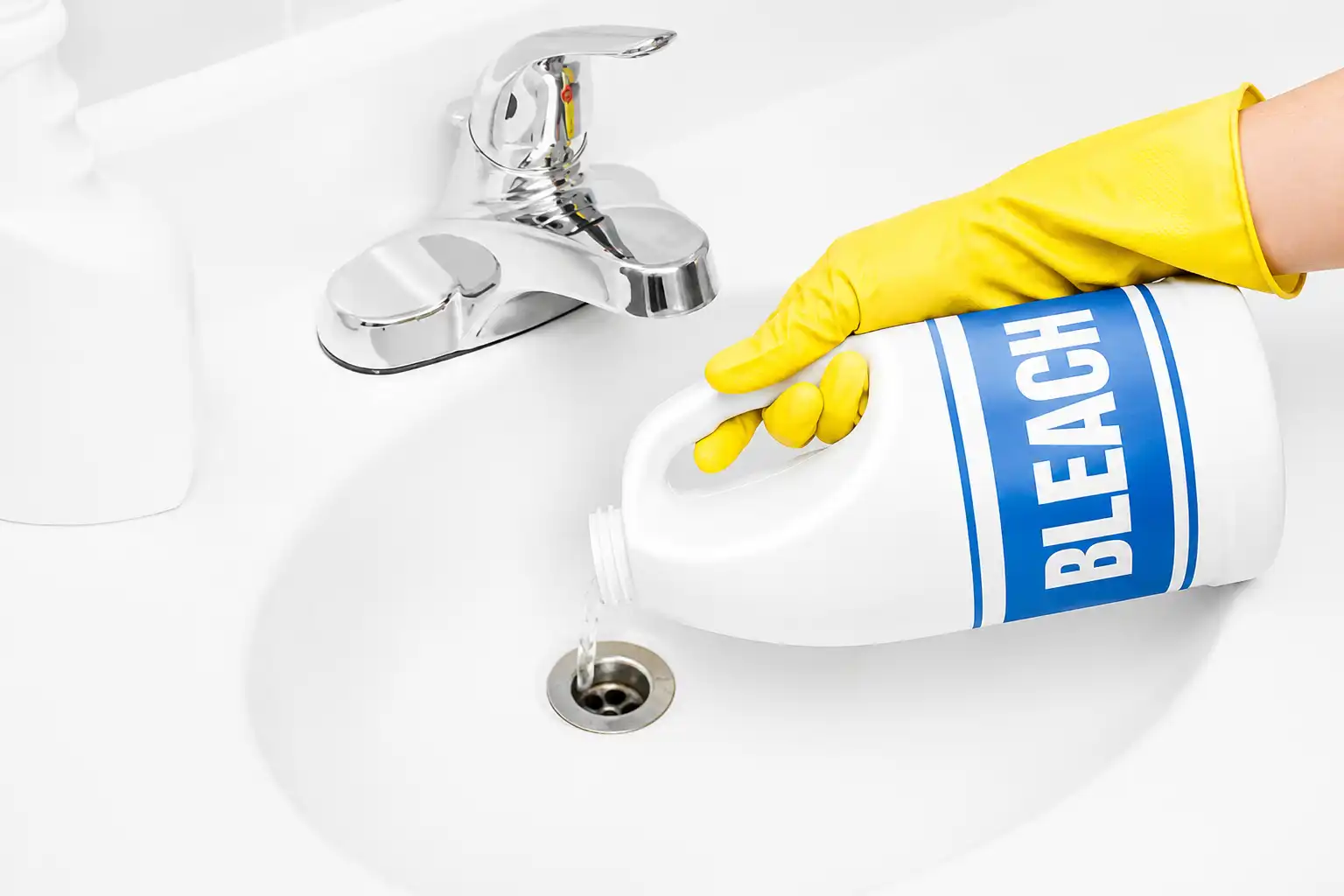
Bleach has a reputation. It sits under the sink like a superhero in a plastic bottle, ready to destroy stains, smells, germs, and possibly your favourite black T-shirt if you get too confident. So when a drain starts smelling funky or running slowly, it is natural to wonder: can you use bleach to clean drains?
The short answer is yes, but only in a very limited way. Bleach can help reduce odours and kill some bacteria near the surface of a drain. However, it is not a real drain cleaner, it does not break down most clogs, and it can create bigger problems if used carelessly. In other words, bleach may freshen things up, but it is not a tiny plumber in a bottle.
Let’s look at what bleach can do, what it cannot do, and when it is smarter to call professionals like Sobo Plumbing for proper drain cleaning.
Bleach is a disinfectant. Its main job is to kill bacteria, viruses, mould, and other microscopic troublemakers. If your drain smells because of bacteria sitting near the opening, a small amount of diluted bleach may help reduce that smell for a while.
But here is the important part: most drain issues are not caused by bacteria alone. Slow drains are usually caused by physical buildup. Think grease, soap scum, hair, toothpaste, food particles, coffee grounds, mineral deposits, and mysterious bathroom sludge that looks like it belongs in a science fiction movie.
Bleach does not dissolve hair. It does not melt grease in a meaningful way. It does not remove thick buildup from pipe walls. It also does not push through solid blockages. So if your sink, tub, or shower is draining slowly, bleach will usually slide over the problem, smell dramatic for a few minutes, and then leave you with the same clog.
Using bleach for a clogged drain is like putting air freshener in a car with a flat tire. The car may smell better, but it still is not going anywhere.
Bleach may seem powerful because of its strong smell, but strong smell does not equal strong clog removal. In many cases, homeowners pour bleach into the drain expecting it to clear the pipe. Then they wait. Then they pour more. Then they start negotiating with the sink like it owes them money.
The problem is that bleach is not designed to remove common clog materials. It is especially weak against:
If water is backing up, gurgling, draining slowly, or returning with a bad smell, the issue is probably deeper than surface bacteria. That is when a professional drain cleaning service in Calgary can make a major difference.
Bleach can be useful in the right situation, but it also comes with risks. The biggest danger is mixing it with other chemicals. Bleach should never be mixed with ammonia, vinegar, acidic cleaners, or many commercial drain cleaners. These combinations can produce toxic fumes that are dangerous to breathe.
Even if you are careful, bleach can still be harsh on plumbing materials when used too often. Occasional diluted use may not destroy your pipes, but repeated heavy use is not a smart maintenance plan. It can also irritate skin, eyes, and lungs, especially in small bathrooms or poorly ventilated areas.
There is also an environmental angle. Bleach is a strong chemical, and dumping large amounts into drains is not exactly a love letter to the water system. Responsible use matters.
There are a few situations where bleach may be acceptable, but only with caution. For example, if a drain smells slightly unpleasant but still flows normally, a small amount of diluted bleach may help disinfect the drain opening and reduce odour.
A safer approach is to clean the visible drain area first. Remove hair from the stopper, wipe away grime, and rinse with hot water. Sometimes the smell is not deep in the pipe at all. It may be sitting right under the drain cover, living its best disgusting life.
If you do use bleach, use a small amount, dilute it with water, avoid mixing it with anything else, and make sure the room is well ventilated. After letting it sit briefly, flush the drain thoroughly with plenty of water.
Instead of depending on bleach, regular drain habits can help prevent many common problems. Good drain care is not glamorous, but neither is standing ankle-deep in shower water while questioning your life choices.
Here are simple habits that actually help:
These habits reduce buildup and help your plumbing system work more smoothly. They will not solve every issue, but they can delay problems and reduce emergency calls.
Professional drain cleaning is different from pouring something into a pipe and hoping for the best. A trained plumber can identify where the blockage is, what caused it, and how serious it is. That matters because not all clogs are the same.
Some blockages are close to the drain opening. Others are deeper in the line. Some are caused by grease. Others are caused by roots, collapsed pipes, or long-term buildup. A bottle of bleach cannot tell the difference. A professional can.
Sobo Plumbing can use proper tools and techniques to clear drains safely and effectively. Depending on the situation, this may include drain snaking, mechanical cleaning, or camera inspection. The goal is not just to make water move again for one afternoon. The goal is to solve the actual problem and help prevent it from coming back.
Calling a plumber in Calgary Ab is especially smart when you notice repeated clogs, sewage smells, bubbling toilets, multiple slow drains, or water backing up. Those are signs that the issue may be larger than one sink or shower.
DIY plumbing can be satisfying when the issue is simple. Cleaning a stopper? Great. Removing visible hair from a drain cover? Wonderful. Feeling like a home maintenance champion? Fully deserved.
But deeper drain problems can turn into expensive mistakes. Using the wrong chemical, forcing a tool too aggressively, or ignoring early warning signs can damage pipes or push the blockage farther down the line. Sometimes the “cheap fix” becomes the opening scene of a much more expensive plumbing adventure.
That is why professional help is often the smarter choice. It saves time, reduces risk, and gives you a clear answer instead of a guessing game involving smells, buckets, and increasingly dramatic internet searches.
Bleach can disinfect and reduce minor odours, but it is not a proper drain cleaning solution. It will not remove most clogs, it can be risky when mixed with other products, and frequent use may do more harm than good.
For a slightly smelly drain that still flows well, careful diluted bleach use may be acceptable. For slow drains, recurring clogs, backups, or strong sewer-like smells, skip the chemical experiment and call Sobo Plumbing. Your pipes do not need a bleach bath. They need the right diagnosis, the right tools, and a professional who knows what is going on behind the scenes.
Because when your drain starts acting suspicious, it is usually better to bring in a pro than to start a chemistry project under the sink.

