Clean and clog-free drains aren’t just about convenience – they’re essential for the health of your entire plumbing system. When water flows smoothly, there are no unpleasant odors, and sinks and tubs function as they should. But sooner or later, every homeowner faces the same problem: water starts draining slowly, a foul smell comes from the sink, or a full-on clog occurs. That’s when the big question comes up: what’s the best way to clear your pipes – chemicals, mechanical tools, natural remedies, or calling in the pros?
 Let’s take a closer look at all the options, especially those most relevant to Canadian households.
Â
Why Do Clogs Happen?
Clogs form when grease, food particles, hair, soap, and mineral deposits build up inside your pipes. In Canada’s colder climate, fats and oils solidify faster, making the problem worse.
The most common trouble spots:
- Kitchen sinks — grease and leftover food.
- Showers and tubs — hair, soap, and cosmetic residue.
- Toilets — non-flushable items or too much paper.
Methods of Drain Cleaning
Chemical Drain Cleaners
These gels and powders are the most common choice – but not always the best. They come in two main types:
- Acid-based — effective on hair and grease.
- Alkaline-based — break down organic buildup and fats.
Pros:
- Fast results.
- Easy to use.
Cons:
- Can damage plastic pipes (PVC and ABS), which are widely used in Canadian homes.
- Release toxic fumes that can affect indoor air quality.
- Harmful to septic systems, common in rural areas.
That’s why it’s best to use them only once or twice. If the problem returns, it likely means a deeper issue – and repeated use of chemicals can cause more serious damage.
Mechanical Cleaning
- Plunger
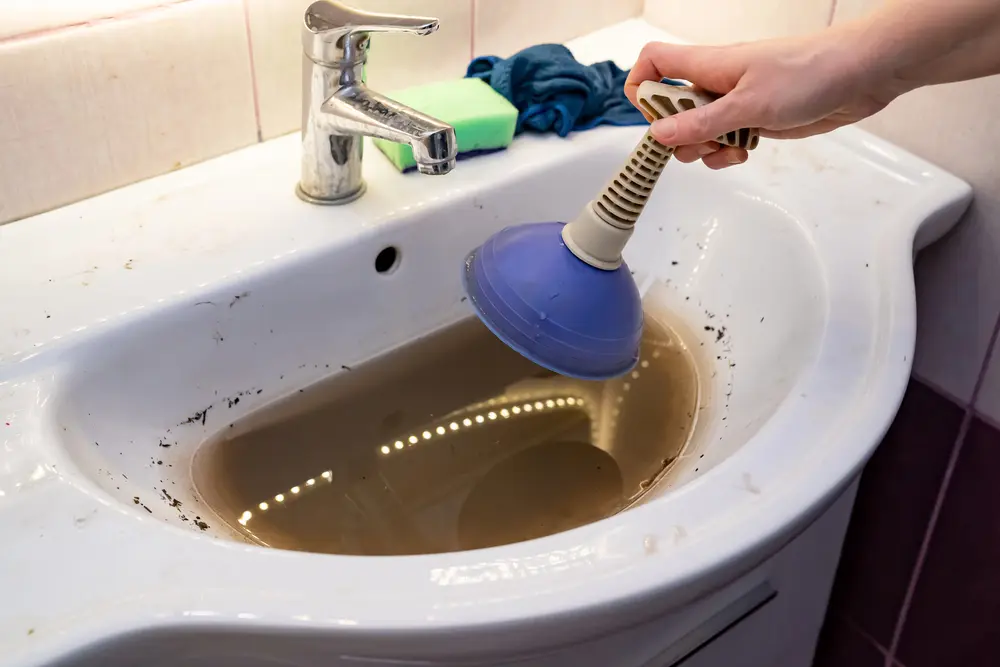
A household staple that creates air pressure to push out a clog. Great for sinks and toilets.
Drawbacks:
Not always effective for deep or solid blockages, only works if there’s enough water, and can get messy. Plus, without the right technique, you might just push the clog further down. - Drain Snake (Auger)
A long, flexible metal tool that reaches deep into the pipe to break apart clogs. Available in manual and electric versions.
Drawbacks:
Requires physical effort, can scratch and even crack cast iron and copper pipes if used aggressively, and the cleanup afterward (hair, grease, and gunk on the cable) isn’t pleasant. Household versions are short (3–5 m), so they won’t help with main sewer clogs. Professional electric augers are effective but expensive – usually used only by plumbers. - Hydro Jetting
A professional method that blasts water at high pressure through pipes, clearing grease, scale, and even tree roots. Very effective in older Canadian homes with cast-iron pipes.
Natural Remedies
For minor clogs, safe and eco-friendly methods work well:
- Baking soda and vinegar — pour half a cup of baking soda followed by one cup of vinegar. After 15 minutes, rinse with hot water. Great for grease and light buildup.
- Boiling water — especially effective for early-stage grease clogs in kitchen drains.
- Salt and baking soda — helps clean pipes and neutralize odors.
These methods are safe for PVC, copper, and cast-iron pipes – and eco-friendly.
Which Method Should You Choose?
- Light clogs — boiling water, baking soda + vinegar, or a plunger.
- Stubborn clogs — a drain snake or professional service.
- Emergency situations — chemical cleaners, but only as a short-term solution before calling a plumber.Â
Canadian Considerations
- Plastic pipes (PVC and ABS): Common in Canadian homes, but highly vulnerable to chemical cleaners.
- Septic systems: In rural areas, chemicals can disrupt septic function.
- Hard water: In many regions, mineral buildup makes regular hot-water flushing especially useful.Â
Preventing Clogs
- Never pour grease or oil down the sink – collect it in a container instead.
- Use a drain strainer to catch hair and food scraps.
- Flush the kitchen sink with boiling water weekly.
- Use baking soda and vinegar once a month as a preventative step.
These small habits greatly reduce the chance of major blockages.
When to Call a Plumber
If water doesn’t drain at all, you hear gurgling noises, or none of the DIY methods help, the clog is likely deep in the system or even in the main sewer line. In that case, it’s best to call a licensed professional. For residents who need fast local help, a reliable drain cleaning company in Calgary can provide the right tools and expertise to clear even the most stubborn blockages.
Bottom Line
There are many ways to deal with clogged drains. For prevention and minor issues, natural remedies like baking soda and vinegar work best. For tougher clogs, mechanical methods – plungers, snakes, or hydro jetting – are the go-to. Chemical cleaners should be a last resort because of the risks to PVC pipes and septic systems.
 Regular maintenance is key to avoiding major problems, and when repairs go beyond simple clogs, homeowners often turn to plumbing specialists in Calgary for complete, long-term solutions.