643 Everridge Drive SW T2Y5E7 Calgary, AB
E-mail us: soboplumbing@gmail.com
Monday-Friday 8am-5pm

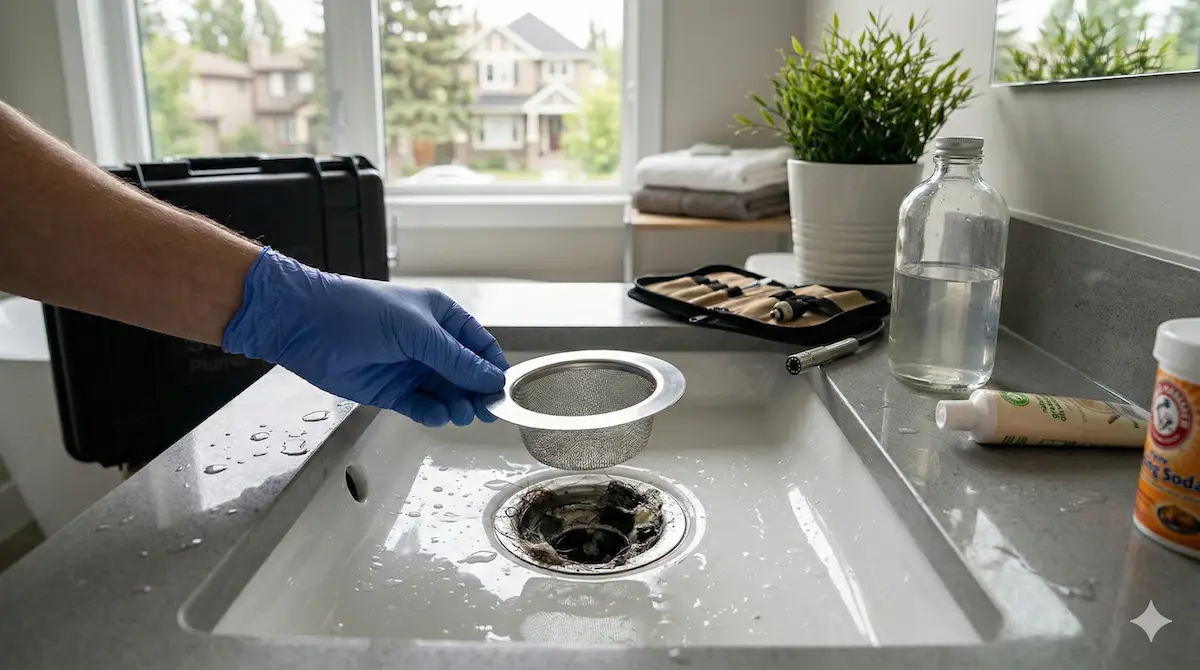
It’s a classic household moment. You notice water draining slower than usual. You catch a faint smell coming from the sink. You open the cabinet, spot a bottle of bleach, and think: “Well, this kills everything else… why not the drain?”
It sounds logical. Bleach is powerful. It removes stains. It disinfects surfaces. It makes things smell “clean.” But when it comes to your drains, the answer isn’t as simple as pouring and hoping for the best.
Let’s break this down properly — with facts, a little humor, and practical advice that could save you from turning a minor clog into a major plumbing bill.
Bleach is a strong chemical disinfectant. Its primary job is to kill bacteria, viruses, and mold. It’s excellent at whitening surfaces and neutralizing certain odors.
What it does not do well is dissolve solid blockages.
Most drain clogs in kitchens are caused by:
In bathrooms, common culprits include:
Bleach does not effectively break down grease. It does not dissolve hair. It does not magically clear hardened soap residue. What it might do is temporarily reduce odor by killing bacteria sitting on top of the clog. That can create the illusion of success.
The clog, however, remains very much alive.
Here’s where things get more serious.
Many homeowners already use other drain cleaners — especially acidic or ammonia-based products. Mixing bleach with certain chemicals can create toxic fumes. For example:
Neither of these belongs in your home.
Even if you don’t intentionally mix products, residual chemicals in your pipes can react unpredictably. This is one reason professional plumbers are cautious about chemical drain treatments. Safety always comes first.
In moderation and diluted properly, bleach usually won’t immediately destroy modern PVC pipes. But repeated use is another story.
Over time, frequent chemical exposure can:
In older homes especially, aggressive chemical cleaning may shorten the lifespan of plumbing components. Replacing sections of pipe is significantly more expensive than clearing a clog properly the first time.
Think of a drain clog like traffic on a highway.
Bleach is like spraying air freshener over a traffic jam. It may improve the smell, but the cars are still stuck.
Real clogs often sit deep inside the pipe where grease has hardened or hair has wrapped around itself into a tight knot. These require either:
This is where professional expertise makes a difference.
If the clog is very minor, you can try safer DIY steps first:
A baking soda and vinegar combination is sometimes suggested. While it can create a fun science experiment in your sink, its actual cleaning power is limited for serious clogs.
The key is knowing when to stop experimenting.
If water continues to drain slowly or backs up, it’s time to move beyond household solutions.
Persistent clogs often indicate deeper problems:
Professional drain cleaning uses specialized equipment such as:
These methods don’t just mask symptoms. They remove the blockage completely and restore proper flow.
This is especially important in homes where multiple drains are affected at once — a sign the issue may be in the main sewer line.
Let’s talk numbers.
A bottle of bleach is cheap. But repeated chemical attempts that fail can lead to:
Suddenly, the “cheap fix” becomes expensive.
Professional residential drain cleaning in Calgary is designed to address the root cause safely and efficiently. Instead of guessing, trained technicians diagnose the exact problem and apply the correct solution.
That precision prevents repeat clogs and long-term pipe damage.
Many homeowners associate odor with “dirty pipes” and assume disinfecting solves everything.
In reality, foul drain odors often come from:
Bleach may temporarily suppress odor by killing surface bacteria. But if debris remains trapped, bacteria will return quickly.
A proper cleaning physically removes buildup — which eliminates the source of the smell instead of covering it up.
Another overlooked factor is environmental impact.
Excessive chemical drain cleaning:
Mechanical cleaning methods used by professional plumbers are often safer for both your plumbing system and the environment.
Here’s the honest answer:
Bleach is not an effective drain cleaner.
It may reduce odors temporarily. It may kill bacteria on contact. But it will not remove most clogs. And repeated use carries risks.
If you’re dealing with a slow drain, treat bleach as what it is — a disinfectant, not a clog remover.
Drain systems are more complex than they appear. Beneath every sink lies a network of pipes that must maintain proper slope, airflow, and structural integrity.
Attempting repeated chemical fixes can:
Choosing experienced plumbing services in Calgary ensures:
Professional plumbers also provide preventative maintenance advice so minor issues don’t turn into major disruptions.
It’s understandable to reach for bleach. It’s sitting right there. It feels powerful. It smells like “clean.”
But drains don’t respond to smell — they respond to physics.
Clogs need to be physically removed or properly flushed with the right equipment. Anything else is often a temporary illusion.
When in doubt, skip the chemical experiment and choose a solution that actually restores your plumbing system. Your pipes — and your future self — will thank you.

