643 Everridge Drive SW T2Y5E7 Calgary, AB
E-mail us: soboplumbing@gmail.com
Monday-Friday 8am-5pm

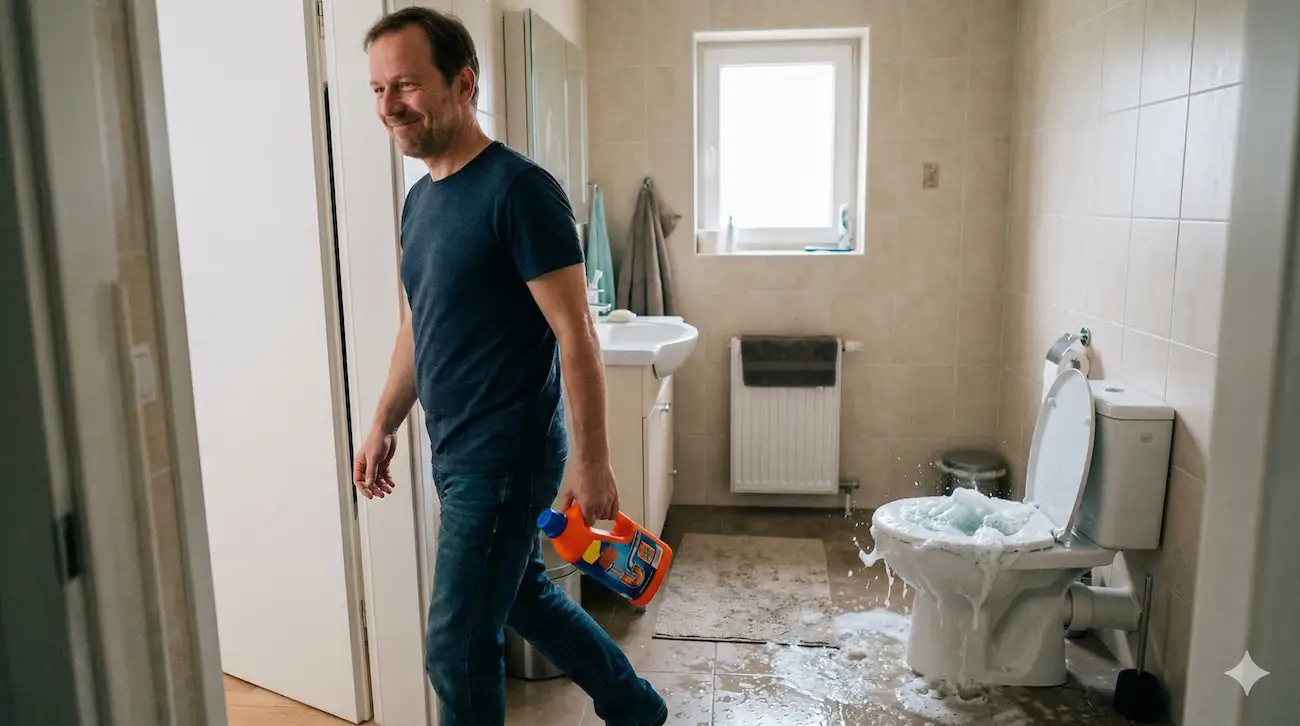
It’s a situation almost everyone faces at some point — you flush, and instead of that satisfying swirl, the water rises… and rises… and suddenly you’re negotiating with gravity and your life choices.
At that moment, many people think: “I’ve got drain cleaner under the sink. Why not just pour it in and fix everything instantly?”
It sounds logical. It feels efficient. It’s also, in many cases, a bad idea.
Let’s break down what really happens when you put drain cleaner in a toilet — and whether it’s a clever shortcut or a plumbing disaster waiting to happen.
Drain cleaners are designed with one goal — to dissolve clogs in pipes. They usually contain strong chemicals that break down hair, grease, soap scum, and organic buildup.
But here’s the catch — toilets are not built like kitchen or bathroom sinks.
Toilets have:
When you pour a chemical drain cleaner into a toilet, it doesn’t always flow smoothly to the clog. Instead, it can sit in the bowl or get stuck in the trap.
And when powerful chemicals just sit there?
That’s where things get interesting — and not in a good way.
Using drain cleaner in a toilet can lead to several unexpected (and expensive) problems.
Some cleaners generate heat as they work. This chemical reaction can cause:
A cracked toilet is not something you want to discover mid-use.
Older plumbing systems — especially those with metal pipes — can react badly to harsh chemicals.
Repeated use of drain cleaners can:
If the toilet is partially clogged, the cleaner may not go down properly. Instead, it can sit in the bowl.
Now imagine plunging after that.
Yes — chemical splashback is as bad as it sounds.
Ironically, drain cleaners don’t always solve toilet clogs. Toilets are often blocked by:
These aren’t always easily dissolved by chemicals. In some cases, the cleaner just adds a layer of sludge to the blockage.
Congratulations — now you have a stronger clog and toxic water.
Technically, yes — but they’re rare.
If the clog is very light and caused by organic material, a mild enzyme-based cleaner (not harsh chemicals) might help.
But here’s the reality — toilets are designed for mechanical solutions, not chemical ones.
A plunger or toilet auger is almost always more effective and safer.
Before reaching for that bottle of industrial-strength cleaner, try these smarter options.
It may not be glamorous, but it works.
A proper flange plunger creates pressure that can dislodge most toilet clogs within minutes.
This is the “gentle persuasion” method:
This can help break down soft blockages.
This tool is specifically designed for toilets.
It can reach deeper into the trap and physically remove the clog without damaging the porcelain.
Sometimes the blockage is deeper in the system — not in the toilet itself.
That’s when professional tools and experience make all the difference.
Here’s something many people overlook — a clogged toilet isn’t always a “toilet issue.”
It can be a symptom of:
In these cases, pouring drain cleaner into the toilet is like putting a bandage on a broken pipe.
It won’t solve the real problem — and it may delay proper diagnosis.
This is where services like sewer cleaning in Calgary become essential, especially when multiple drains in the home start acting up.
Experienced plumbers tend to agree on one thing — using chemical drain cleaner in a toilet is rarely worth the risk.
Here’s why:
Professional equipment can clear clogs without harming your plumbing, and more importantly — identify the root cause.
It’s tempting to go for quick DIY fixes, especially when they’re sitting right under your sink.
But plumbing systems are more complex than they appear.
A simple mistake — like using the wrong product in the wrong place — can turn a minor inconvenience into a costly repair.
That’s why many homeowners choose to rely on expert plumbing services in Calgary when things go wrong. It’s faster, safer, and often cheaper in the long run.
Short answer — no, not in most cases.
Long answer — it’s a risky move that can:
Toilets respond best to mechanical solutions, not chemical ones.
So the next time your toilet decides to test your patience, skip the chemical experiment. Grab a plunger, try a safer method, or bring in someone who knows exactly what they’re doing.
Because when it comes to plumbing, a quick fix isn’t always a smart fix — and sometimes, the best solution is knowing when not to DIY.

