643 Everridge Drive SW T2Y5E7 Calgary, AB
E-mail us: soboplumbing@gmail.com
Monday-Friday 8am-5pm

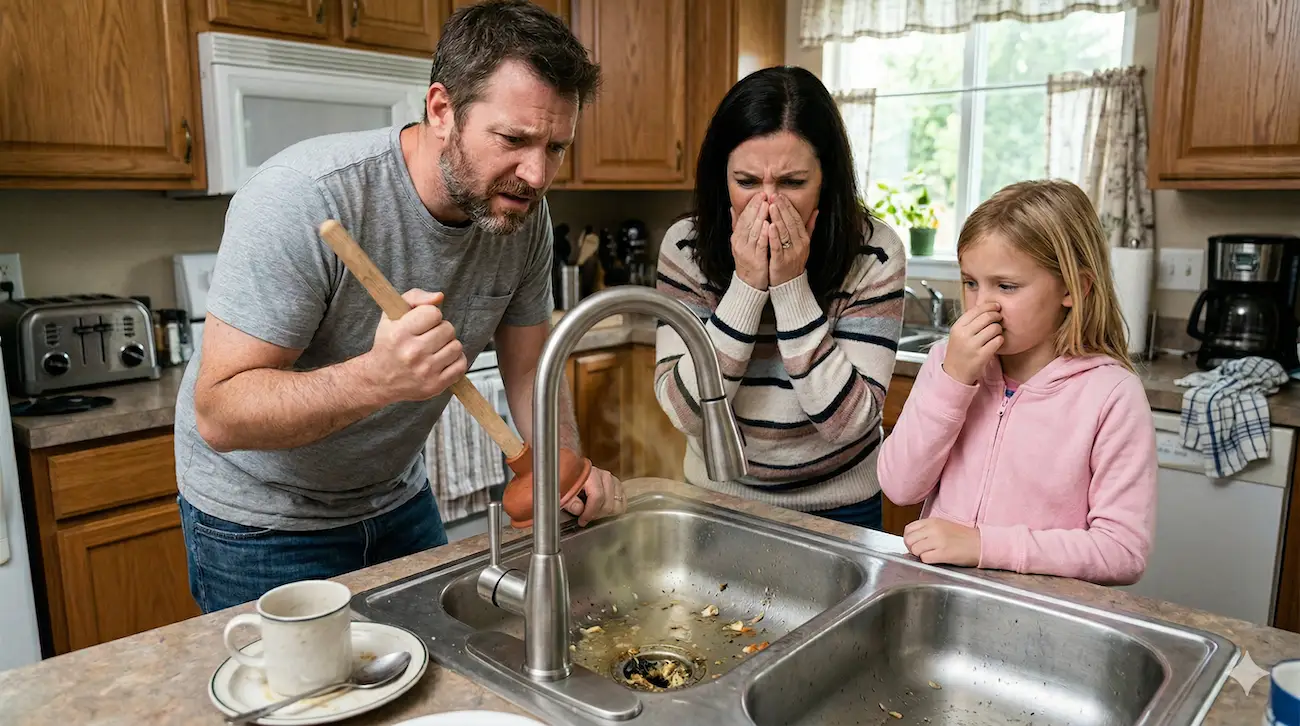
Let’s be honest – nothing ruins a perfectly good day like a mysterious smell creeping out of your drain. One moment you’re enjoying your morning coffee, and the next… your kitchen smells like something died in the pipes and decided to stay forever.
The good news? Smelly drains are extremely common. The better news? There are ways to deal with them. And the best news? You don’t always have to suffer through it alone – sometimes calling professionals is the smartest move (and your nose will thank you).
Before jumping into cleaning, it helps to understand what’s actually causing the smell. Spoiler alert – it’s not magic, and it’s definitely not your imagination.
Most drain odors come from:
Over time, this lovely mix turns into a breeding ground for odor-producing bacteria. Think of it as an all-you-can-eat buffet… just not one you’d ever want to attend.
Sometimes, the issue goes deeper:
That’s when DIY solutions start to struggle.
It may sound too easy, but boiling water is often the best first step.
Why it works:
How to do it:
If your pipes are older or made of PVC, avoid pouring aggressively – slow and steady wins the race here.
This step alone can sometimes eliminate mild odors completely.
Ah yes, the science experiment you probably did as a kid. Turns out it’s actually useful.
Here’s how it works:
Steps:
It won’t clear a serious clog, but it’s excellent for maintenance and light odor removal.
Also, it’s oddly satisfying to watch. Free entertainment included.
If you’ve never pulled out your drain stopper… prepare yourself.
This is often where:
What to do:
You’ll likely notice an immediate improvement in smell.
If you want something more advanced but still safe, enzyme-based cleaners are a great option.
They work by:
Unlike harsh chemicals, they won’t damage pipes or create toxic fumes.
This is a great middle-ground solution before calling in professionals.
Under your sink is a curved pipe called the P-trap. It holds water to block sewer gases from entering your home.
If it dries out or gets clogged:
What to do:
This step can solve some of the most confusing odor issues.
Here’s the part most people ignore – not all drain problems are surface-level.
If you notice:
You’re likely dealing with a deeper issue:
At this point, DIY methods become temporary fixes at best.
This is where professional services like residential drain cleaning in Calgary come in. Experts use specialized tools like drain snakes, hydro-jetting, and inspection cameras to actually solve the root problem – not just cover it up.
It’s tempting to keep trying DIY solutions, especially when they seem cheaper. But here’s the reality:
Professionals offer:
Plus, they save you from:
Sometimes the smartest move isn’t doing more – it’s doing it right.
Once your drain is clean, keeping it that way is much easier than fixing it again.
Simple habits that make a big difference:
Consistency beats deep cleaning every time.
Cleaning a stinky drain doesn’t have to be a nightmare. With the right steps, you can handle minor issues on your own and keep your home smelling fresh.
But when the smell keeps coming back, it’s usually a sign of something deeper. That’s when bringing in professionals isn’t just helpful – it’s the most effective solution.
After all, life’s too short to live with mysterious smells coming from your sink.

